
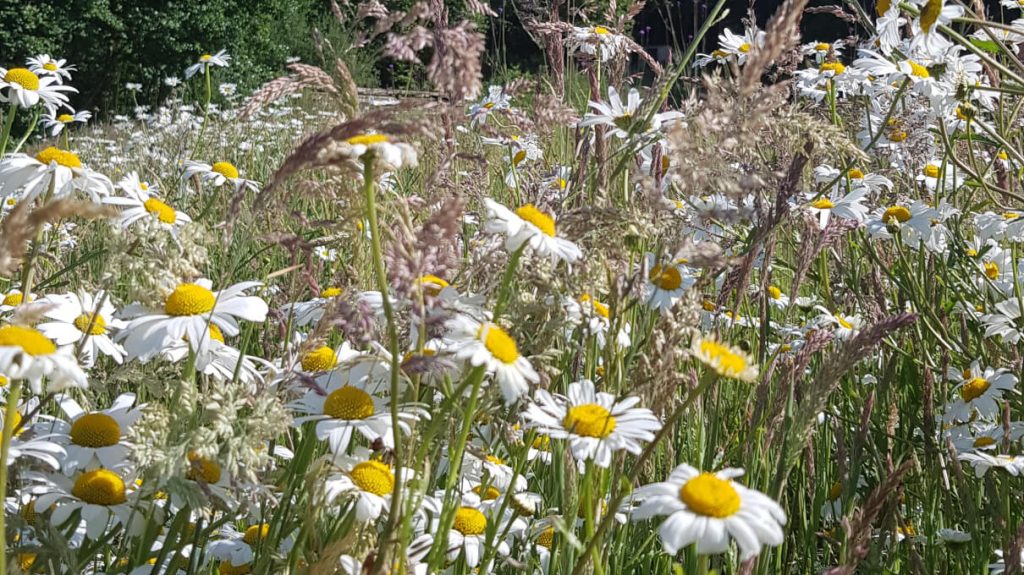
A wildflower meadow is beautiful in it’s simplicity, and requires very little effort in terms of actual gardening. Ok they need a little effort at the beginning when it comes to preparing the soil, but that effort is soon rewarded with a swathe of colourful native plants that will attract pollinators and various types of wildlife to your garden. Pollinators can sometimes find it easier to feed from simple wildflowers than some of our more exotic looking cultivated plants, which may contain ruffled ornamental flowers – difficult for those pollinators to feed from.
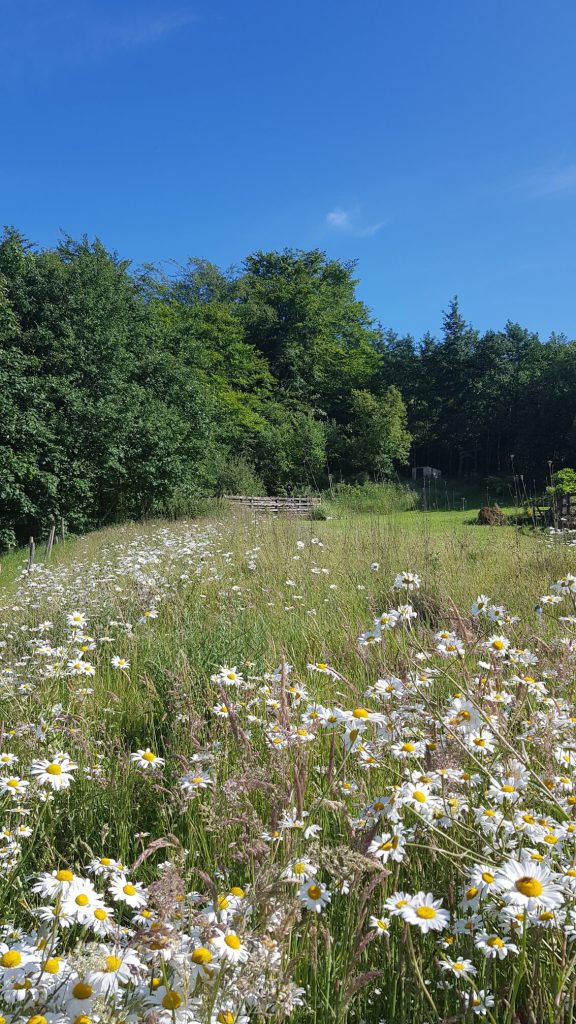
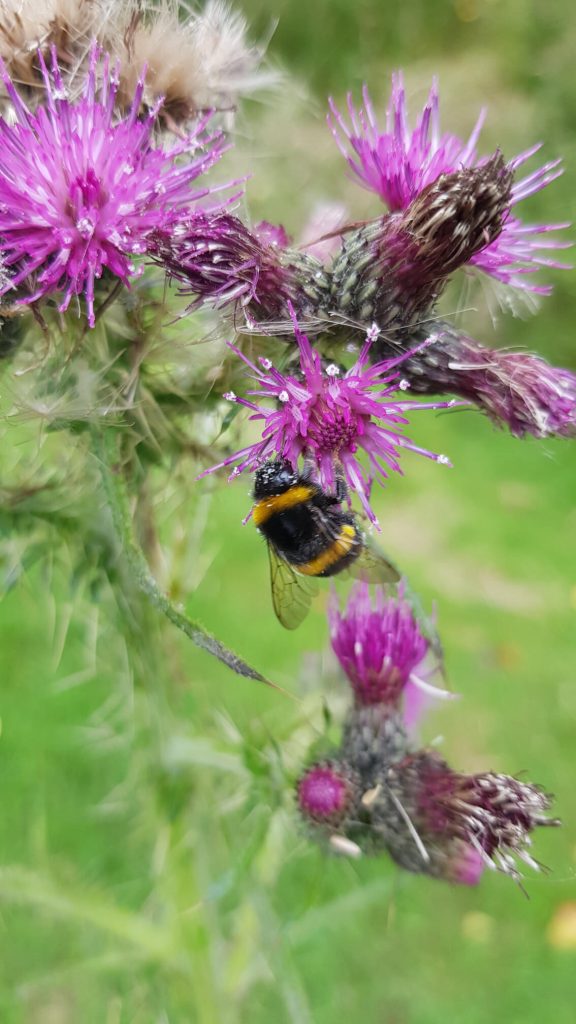
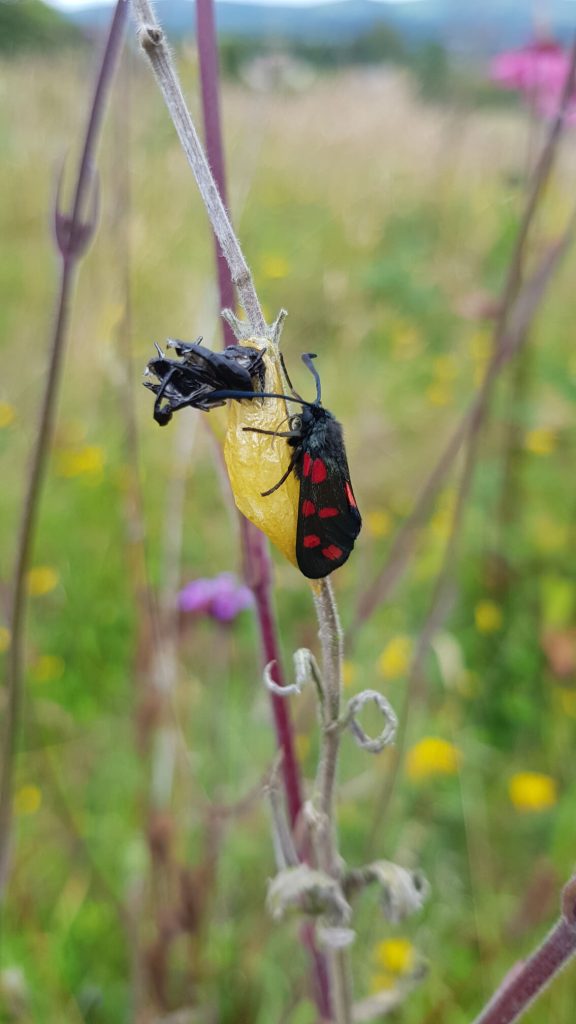
My own wildflower meadow teems with butterflies, bumblebees, moths, grasshoppers, slugs, and so on. Slugs? Why would I want to encourage those? Because they also attract the frogs and hedgehogs that frequent my meadow. Let’s take a look at how to create a wildflower meadow.
When should I sow a wildflower meadow?
Wildflower seeds should be sown in Autumn. The reason for this is that some wildflower seeds rely on winter frost as part of the germination process. If sown in Spring, these seeds may not germinate till the following year. If you observe wildflowers in your own garden, look to see when they release their seed, and then you will know in the future when to sow that seed. For example, my Foxgloves will start to drop seeds from August on, so I will always sow Foxglove seeds around the start of September. Nature always has a way of letting us know when to do things!
Before you start, have a look at your garden again. Are there wildflowers already growing? Again, the environment local to your garden will help to inform you about what grows best and where. A fantastic resource for identifying native Irish wildflowers is Irish Wildflowers.
Some seed sellers are able to provide custom mixes of wildflower to suit your environment.
Can I scatter wildflower seeds on grass?
In my experience, scattering wildflower seeds directly onto grass is a waste of time, seeds, and ultimately, money. I’ve done it myself. You buy those 1kg boxes of wildflower seed in the local supermarket, take them home, and shake them around the place. And usually nothing happens. In order to get the most from wildflower seeds, the ground has to be prepared properly.
How to prepare the ground for wild flower seeds?
Any existing grass should be cut as low as possible, using a mower, or if you prefer a more eco friendly and rewarding approach, a scythe. The area should then be given a vigorous raking, or scarifying, to remove as much of the grass as possible. You should be aiming to remove at least 50% of the grass.
Ideally you want 100% removal of existing grass or any stubborn plants such as Nettle, Dock, Cow Parsley etc. With a little bit of forethought, the area can be prepared in the summer, by layering your selected area with cardboard. The cardboard will suppress any grass, and eventually kill it off. The nice thing about using cardboard for this over say weed suppressant membrane, is that the cardboard can be added to your compost heap. (As always, chemical free methods are the only option here In the Wild Garden). You will find that local shops, factories etc are only too willing to give you cardboard, as it saves them a trip to the recycling centre. Any stubborn plants that want to regrow can be hoed or raked out of the bare soil. The bare soil can then be raked to a fine tilth ready for wildflower seed.
Sowing wildflower seed
When selecting a wildflower seeds, if you can, use native Irish wildflower seeds, as the life cycle of the plants will be in tune with the native wildlife that will benefit from them. Typical native Irish wildflower seed mixes will be have some mix of:
- Birdsfoot Trefoil
- Black Meddick
- Cowslip
- Devil’s Bit Scabious
- Lesser Knapweed
- Meadowsweet
- Ox-eye Daisy
- Red Clover
- Yellow Rattle
Grass can get a bit thuggish in wildflower meadows, and can choke out the wildflowers themselves, especially if it hasn’t been 100% cleared during the preparation stage. Yellow Rattle, known as “The Meadow Maker” is a semi-parasitic plant that will help to weaken grass roots. It’s not a bad idea to add extra Yellow Rattle seed to your seed mix.
Mix seeds with sand. The sand aids in two ways; firstly it helps to bulk out the scatter material, so that you don’t throw all your seeds in one go, and secondly, being a different colour to the prepared soil, will also help to identify where there are likely to be gaps in your sowing. Sow to the correct amount per square metre as indicated by your seed supplier.
Finally, tamp down the area by foot, or by standing on a board. If working with a large area, use a water filed roller. This helps the newly scattered seeds to make contact with the soil. In order to germinate, the seeds must be in contact with as much soil as possible. Your new wildflower meadow should now be ready to flower the following Spring and Summer!
Enjoy!
Walking alongside your own wildflower meadow on a warm summer’s evening, watching nature at work (butterflies flitting from flower to flower, the deep buzz of bumblebees, or Swallows swooping low over the meadow), is one of the most serene and rewarding parts of gardening for me, and I cannot recommend it enough.
Leave a Reply